

More Than a Clean Coat: How Grooming Supports Lymphatic Drainage and Fascia
Most of us start grooming with one simple goal: get the mud off and the coat looking presentable. But if your horse is a bit tight through the shoulder, “puffy” in the legs after standing in, or generally moving like they need a few minutes to loosen up, grooming can do more than polish the surface.
In this article, we’ll look at how specific grooming techniques can support lymphatic flow and encourage fascia glide—so your horse doesn’t just look cleaner, but feels freer to move as well.
Fascia: the “web” that needs warmth and movement to glide
Fascia is the connective tissue web that sits through and around the whole body—over muscles, between muscle groups, and under the skin. In a horse that’s moving well, those layers are meant to glide over each other rather than feeling stuck.
That glide is helped by fluid within the fascial layers. When a horse is cold, has been standing in, or is coming back into work, tissues can feel more “grabby”. Movement helps. Warmth helps. And this is where grooming becomes more than cosmetic.
What grooming changes (when you do it with purpose)
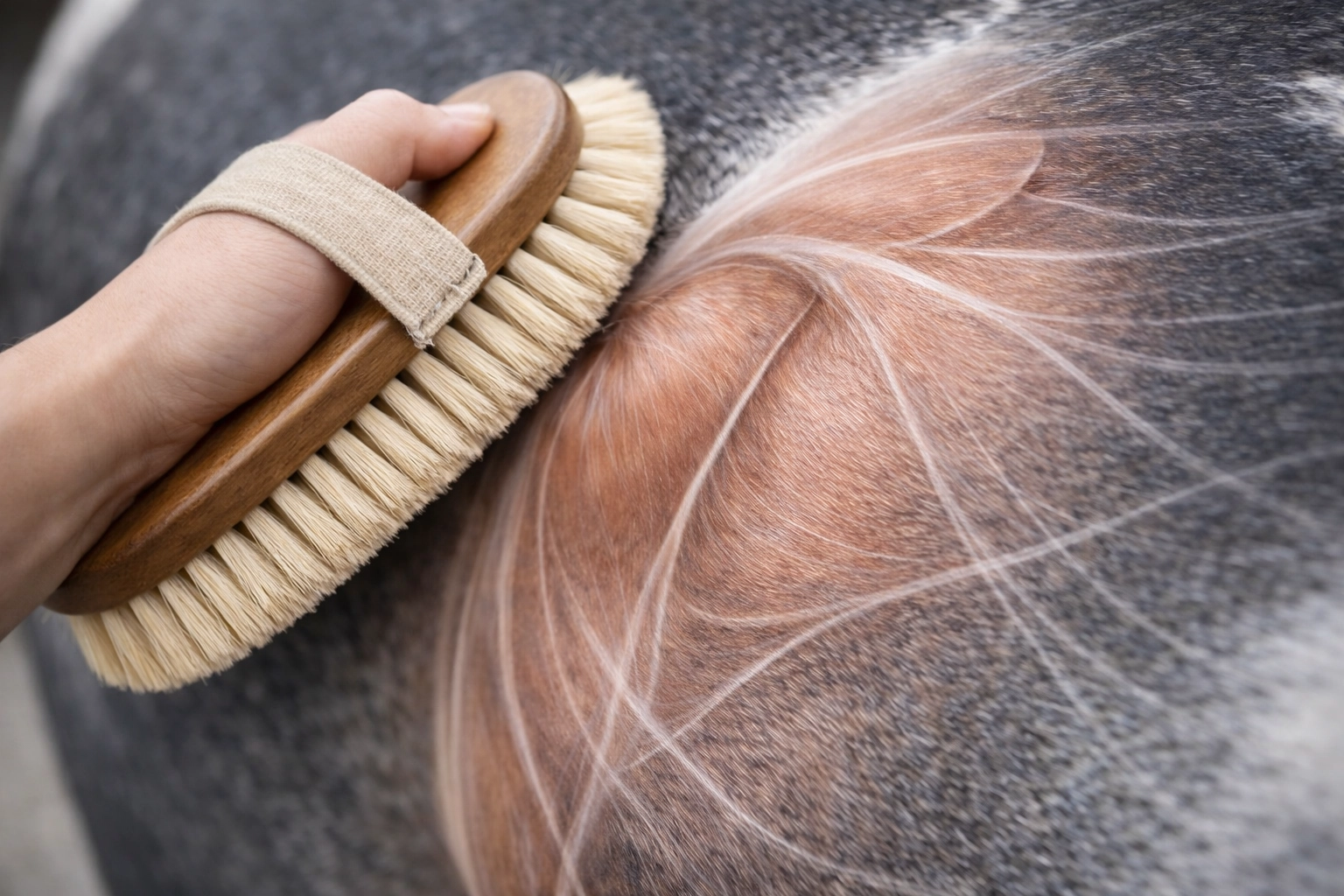
Rhythmic, even pressure creates gentle friction and local warmth at the surface.
Done well, it’s like switching tissues from “stiff” to “ready”. Not by forcing a stretch, but by warming the superficial fascia and inviting it to slide.
This is the foundation of the Eqclusive approach: you’re not scrubbing the coat. You’re preparing the body for better movement.
Practical translation: the “Long Lane” technique
Think long, unbroken lanes rather than short, busy strokes.
- Choose a brush that can reach through the coat without scraping the skin.
- Work in long strokes along the neck, shoulder, barrel and quarters.
- Keep the rhythm steady and the pressure consistent.
You’re aiming for warmth and flow, not a deep massage and not a harsh “rake”.
Lymphatic drainage: why direction matters
The lymphatic system helps manage fluid balance and “waste clearance” in tissues, but it doesn’t have a central pump like the heart.
It relies on three things:
- muscle contraction
- regular movement
- external pressure (including hands-on work like grooming)
When lymph flow is sluggish, you often see it as stable stocking, filled legs, or that slightly “puffy” look after standing in.
Where you’re trying to send fluid
For grooming purposes, you’re supporting drainage towards key regions:
- Forehand: toward the sternum and the “armpit” area (axillary region)
- Hindquarters: toward the groin (inguinal region)
You’re not trying to force fluid. You’re giving it a clearer pathway, with calm, consistent strokes.
Practical translation: directional brushing
Use your long lanes, but change the finish point:
- Neck/shoulder/barrel (forehand): brush toward the chest.
- Quarters/haunch (hind): brush toward the groin.
If your horse is sensitive, reduce pressure and increase time. Irritation is the opposite of what we want—calm input, not abrasion.
The lower limb problem: no muscles, so it needs a “pump”
Below the knee and hock there’s very little muscle to help move fluid back up the leg. That’s one reason legs can fill when horses stand in, travel, or have reduced turnout.
Practical translation: the “fetlock pump” (and why walking beats everything)
Each step flexes and releases the structures around the fetlock and hoof, helping push fluid upward.
So yes, you can support the legs with grooming:
- keep strokes light but deliberate
- brush upwards from fetlock/cannon toward the body
- avoid aggressive pressure over tendons
But the real game-changer is simple movement.
A 10-minute walk after standing in (and after travel) is one of the most effective “fetlock pumps” you can give your horse—because it uses the body’s own mechanics.
What it should look like on the yard
When fascia warms and starts to glide, and when you support lymph flow with better direction, the “result” often isn’t dramatic. It’s subtle.
Look for:
- a shoulder that feels less braced under the brush
- a horse that starts to stand more evenly
- softer breathing
- the head dropping a fraction
- a general “that feels nice” stillness
If your horse becomes tense, tail swishes, or the skin twitches constantly, that’s useful data: it usually means pressure, brush choice, or speed needs adjusting.
The Eqclusive POV: tools should warm, not irritate
Here’s our stance: if your brush choice creates friction that scrapes rather than warms, you’re not supporting fascia or lymph—you’re just irritating skin.
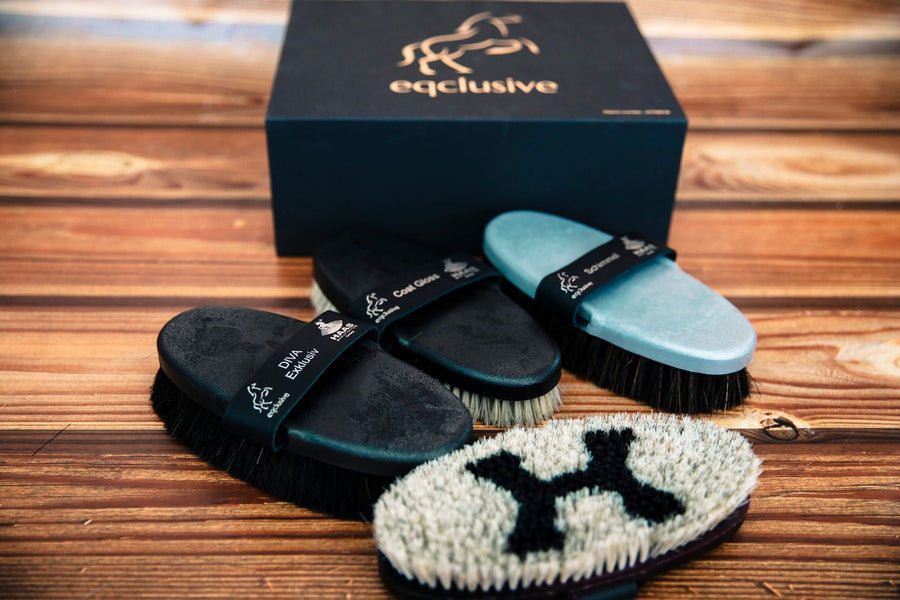
That’s why the Eqclusive Method is built around a progression, not a random handful of brushes. The aim is to reach the skin, create safe warmth, and then organise the coat and tissues with calmer, more precise contact.
Openers: safe friction, real warmth
Our Openers are designed to reach through the coat and create the kind of controlled friction that helps warm superficial fascia—without the sharp, scratchy feel that makes horses brace.
Use them in long lanes first, before you worry about “finishing”.
Organisers: directional work for lymph flow
Once the tissue is warm, Organisers are where direction becomes everything.
This is where you refine your lanes:
- forehand lanes finishing toward the chest
- hind lanes finishing toward the groin
It’s a small change that can make your grooming feel completely different to the horse.
Conclusion: cleaner coat, freer horse
Grooming will always be about cleanliness.
But done with the right pressure, rhythm, and direction, it can also support the systems that help your horse feel looser through the body and less “stagnant” in the limbs.
Use long lanes to warm.
Brush with direction toward the chest and groin.
Then add the simplest pump of all: a short walk.
If you want to go deeper, explore the science behind the Eqclusive Method and how our Openers and Organisers are built to support this kind of grooming—without irritation.

Leave a comment